Designing group employer benefits can feel overwhelming when you’re running a small or mid-sized business in North Carolina. Between rising healthcare costs, compliance requirements, and employee expectations, it’s easy to feel stuck. The good news: with a clear plan—and the right local partner—you can build a benefits package that attracts talent, protects your team, and fits your budget.
In this guide, you’ll learn what “group benefits” really mean, what’s required in North Carolina, and how Bartley Insurance Services can help you design and manage a plan that works for your business today and scales with you tomorrow.
What Are Group Employer Benefits?
Group employer benefits are insurance and financial protection programs that you, as an employer, offer to your employees—often at a better rate than they could get on their own.
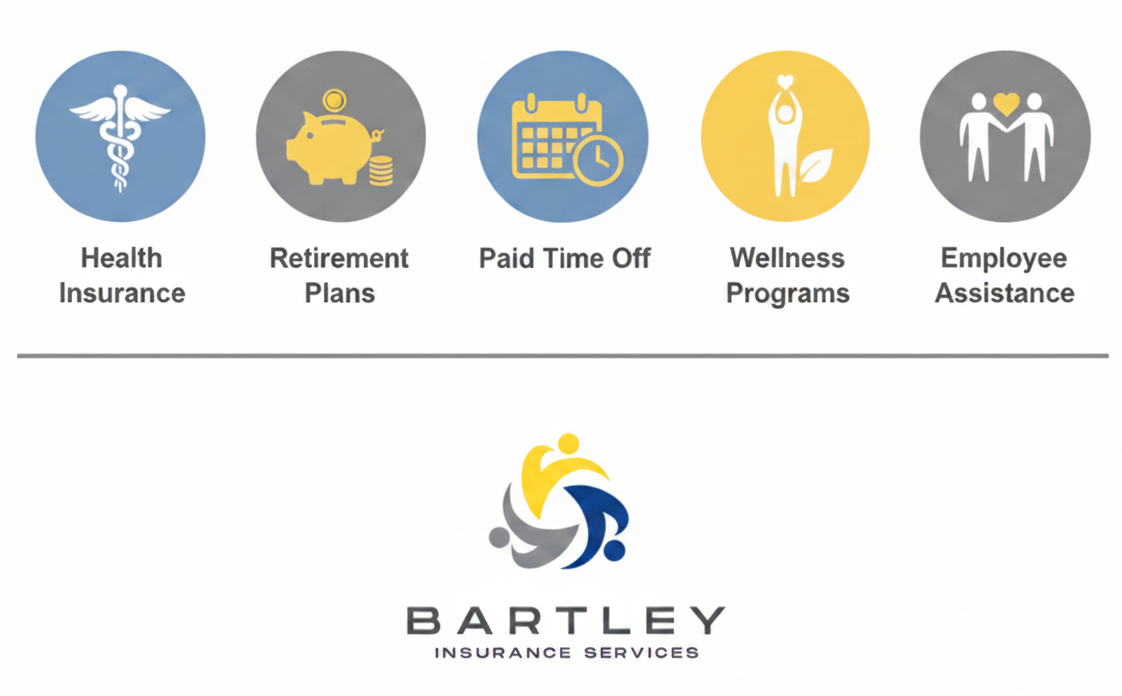
Typical components include:
- Group health insurance (medical, sometimes with dental and vision)
- Life insurance (employer-paid basic life, optional voluntary life)
- Disability insurance (short-term and/or long-term)
- Supplemental benefits (accident, critical illness, hospital indemnity)
- Retirement plans (such as a 401(k) or SIMPLE IRA)
For small and mid-sized employers in North Carolina, the core decision usually starts with health insurance, but the most competitive packages layer in additional benefits that are surprisingly affordable.
Why Group Benefits Matter for NC Small and Mid-Sized Businesses
1. Recruiting and Retaining Talent
In many North Carolina markets—Raleigh-Durham, Charlotte, the Triad, and growing rural communities—good employees have options. Salary matters, but benefits often tip the scale when candidates compare offers.
Strong group benefits can help you:
- Compete with larger employers who offer robust benefit packages
- Reduce turnover and the costs of constantly rehiring and retraining
- Build a reputation as a stable, employee-focused company
2. Supporting Employee Health and Productivity
Healthy employees are more productive and engaged. Access to affordable medical care, preventive services, and mental health support can reduce absenteeism and help your team stay focused on serving your customers.
When employees know their families are covered, they’re less stressed—and more loyal.
3. Tax Advantages for Employers and Employees
Well-designed group benefits can be tax-efficient:
- Employer contributions to health insurance are generally tax-deductible as a business expense.
- Employee contributions can often be made pre-tax, lowering their taxable income.
- Certain benefit structures (like HSAs and FSAs) provide additional tax advantages.
Working with a knowledgeable agency like Bartley Insurance Services helps you structure plans to take advantage of available savings without running afoul of IRS or state rules.
North Carolina-Specific Considerations
While much of benefits law is federal (ACA, ERISA, COBRA), North Carolina has its own rules and marketplace realities that impact small and mid-sized employers.
Employer Size and ACA Requirements
Under the Affordable Care Act (ACA):
- Fewer than 50 full-time equivalent employees (FTEs): You are generally not required to offer health insurance, but offering coverage can be a major competitive advantage.
- 50 or more FTEs: You are considered an Applicable Large Employer (ALE) and may face penalties if you do not offer affordable, minimum-value coverage to full-time employees.
An experienced advisor can help you correctly count FTEs, especially if you use part-time or seasonal staff.
The North Carolina Small Group Market
In North Carolina, the small group market typically includes employers with 1–50 employees. Carriers in this market must follow certain rating and coverage rules, which can be both a constraint and an opportunity.
Bartley Insurance Services understands the NC small group landscape, including:
- Which carriers are strongest in your region
- Which networks offer the doctors and hospitals your employees actually use
- How to balance premiums, deductibles, and out-of-pocket costs
State-Mandated Benefits and Compliance
North Carolina insurers must include certain state-mandated benefits in fully insured health plans, and there are rules related to continuation of coverage, coordination with workers’ compensation, and more.
Instead of trying to interpret regulatory fine print on your own, you can lean on a local agency that works with these rules every day and can help keep your plan compliant.
Key Types of Group Benefits to Consider
1. Group Health Insurance
Health insurance is usually the cornerstone of your benefits package. Key decisions include:
- Plan type: HMO, PPO, EPO, or high-deductible health plan (HDHP)
- Network: Which doctors and hospitals are in-network where your employees live
- Cost-sharing: Deductibles, copays, coinsurance, and out-of-pocket maximums
- Employer vs. employee contribution: How much of the premium you will cover
Many North Carolina employers choose a mix of plan options—for example, a lower-deductible plan and a more affordable HDHP—so employees can choose what fits their needs and budgets.
2. Dental and Vision Coverage
Dental and vision are relatively low-cost add-ons that employees value highly. They are often offered as:
- Employer-paid
- Voluntary (employee-paid)
- Or a blend (employer pays a portion)
These plans can be bundled with medical or placed with separate carriers, depending on pricing and network strength.
3. Group Life and Disability Insurance
Life and disability coverage help protect your employees and their families if the unexpected happens.
Common structures include:
- Basic group life (for example, $25,000 or 1x salary, employer-paid)
- Voluntary life (employees can buy extra coverage at group rates)
- Short-term disability (STD) (replaces income for a short period)
- Long-term disability (LTD) (protects income during extended illness or injury)
These benefits often cost far less than employers expect—and can be a powerful differentiator vs. competitors.
4. Supplemental and Voluntary Benefits
To enhance your package without significantly increasing your budget, consider voluntary supplemental benefits such as:
- Accident insurance
- Critical illness coverage
- Hospital indemnity plans
- Legal or identity theft protection
Employees typically pay for these themselves through payroll deduction, but they appreciate having access to vetted, cost-effective options.
5. Retirement Plans
While retirement plans are not “insurance,” they are a key part of a modern benefits package.
Popular options for NC small and mid-sized employers include:
- 401(k) plans (with or without employer match)
- SIMPLE IRAs
- SEP IRAs (common for owner-only or very small businesses)
Coordinating your retirement plan strategy with your insurance benefits can create a more cohesive, attractive offering.
How to Build a Group Benefits Strategy That Fits Your NC Business
Step 1: Clarify Your Objectives and Budget
Before looking at plan designs, get clear on your goals:
- What is your total benefits budget per employee per month?
- Are you trying to attract higher-level talent, stabilize your current team, or both?
- Do you want to cover employees only, or also spouses and dependents?
- Are you planning to grow headcount significantly over the next 1–3 years?
Having a target budget and priorities helps your advisor recommend realistic options instead of generic “off-the-shelf” plans.
Step 2: Understand Your Workforce
Your team’s demographics and preferences should shape your benefits decisions. Consider:
- Average age and family status (single, families, nearing retirement)
- Whether employees are clustered in one region or spread across North Carolina
- Typical health needs and provider preferences
- How price-sensitive employees are to premiums and out-of-pocket costs
Bartley Insurance Services can help you gather anonymous feedback or run surveys to understand what your employees value most.
Step 3: Work with a Local Benefits Advisor
Trying to navigate plan options, networks, and regulations on your own can be a time-consuming and costly trial-and-error process.
A local, independent agency like Bartley Insurance Services can:
- Shop multiple carriers on your behalf
- Explain plan options in plain language
- Negotiate competitive rates where possible
- Help you balance cost with coverage
Because they work with North Carolina employers every day, they know which carriers tend to perform well in your area and which plan designs have worked for companies like yours.
Step 4: Compare Plan Designs and Funding Options
Together with your advisor, you’ll review plan options such as:
- Traditional fully insured plans
- Level-funded or partially self-funded plans (for qualifying groups)
- HSA-compatible high-deductible plans
- Tiered or reference-based pricing designs, where appropriate
Each has tradeoffs in terms of risk, cost, and administrative complexity. Your advisor can model different scenarios so you can see the impact on both employer and employee costs.
Step 5: Finalize Contributions and Eligibility Rules
Once you choose plans, you’ll decide:
- What percentage of the employee-only premium you will cover
- How much, if anything, you will contribute toward dependent coverage
- Eligibility criteria (for example, 30 or 40 hours per week; waiting periods)
Clear, consistent rules help prevent confusion and ensure compliance.
Step 6: Communicate Clearly with Your Employees
Even the best benefits package can fall flat if employees don’t understand it.
Work with your advisor to provide:
- Simple, one-page benefit summaries
- Group meetings or virtual webinars to explain options
- Enrollment support and Q&A
Bartley Insurance Services can help you host enrollment meetings, answer employee questions, and provide ongoing support after your plan goes live.
Managing Costs Without Sacrificing Quality
Cost is often the biggest concern for small and mid-sized employers. There are practical ways to manage premiums while still providing solid coverage.
Use Plan Design Strategically
Consider strategies like:
- Offering a base plan with a moderate deductible and an optional buy-up plan
- Pairing a high-deductible plan with an HSA and employer contributions
- Adjusting copays and coinsurance slightly to keep premiums manageable
Encourage Preventive and In-Network Care
Educate employees on:
- Using in-network providers whenever possible
- Taking advantage of no-cost preventive services
- Using telehealth options for minor issues
Better utilization can help control claim costs over time.
Review Your Plan Annually
The North Carolina benefits market changes frequently. New carrier options, network changes, and regulatory updates can all impact your plan.
Schedule an annual review with Bartley Insurance Services to:
- Evaluate renewal rates and shop alternatives if needed
- Adjust plan designs based on employee feedback and claims experience
- Update contributions and eligibility rules as your business grows
Why Partner with Bartley Insurance Services
Designing and managing group benefits is not a one-time decision—it’s an ongoing strategy. Partnering with Bartley Insurance Services gives you a local, experienced team that understands both the North Carolina market and the realities of running a small or mid-sized business.
You get:
- Personalized guidance instead of generic online quotes
- Access to multiple carriers and plan types
- Hands-on support with implementation, enrollment, and ongoing service
- Compliance awareness to help you avoid costly mistakes
Most importantly, you gain a partner who listens to your goals, explains your options clearly, and helps you make confident decisions.
Next Steps: Build a Better Benefits Package for Your NC Business
You don’t have to choose between protecting your budget and taking care of your people. With a thoughtful strategy and the right advisor, you can create a benefits package that supports your employees, strengthens your culture, and helps your business compete.
If you’re a small or mid-sized employer in North Carolina and you’re ready to review your current benefits—or design a new package from scratch—Bartley Insurance Services is ready to help.
Call now to:
- Compare group benefit options tailored to your industry and location
- Understand your responsibilities under federal and North Carolina law
- Build a clear, sustainable benefits strategy for the next 12–24 months
Take the next step toward a stronger, more competitive business by partnering with a local expert who puts your team first. Bartley Insurance Services is here to help!